

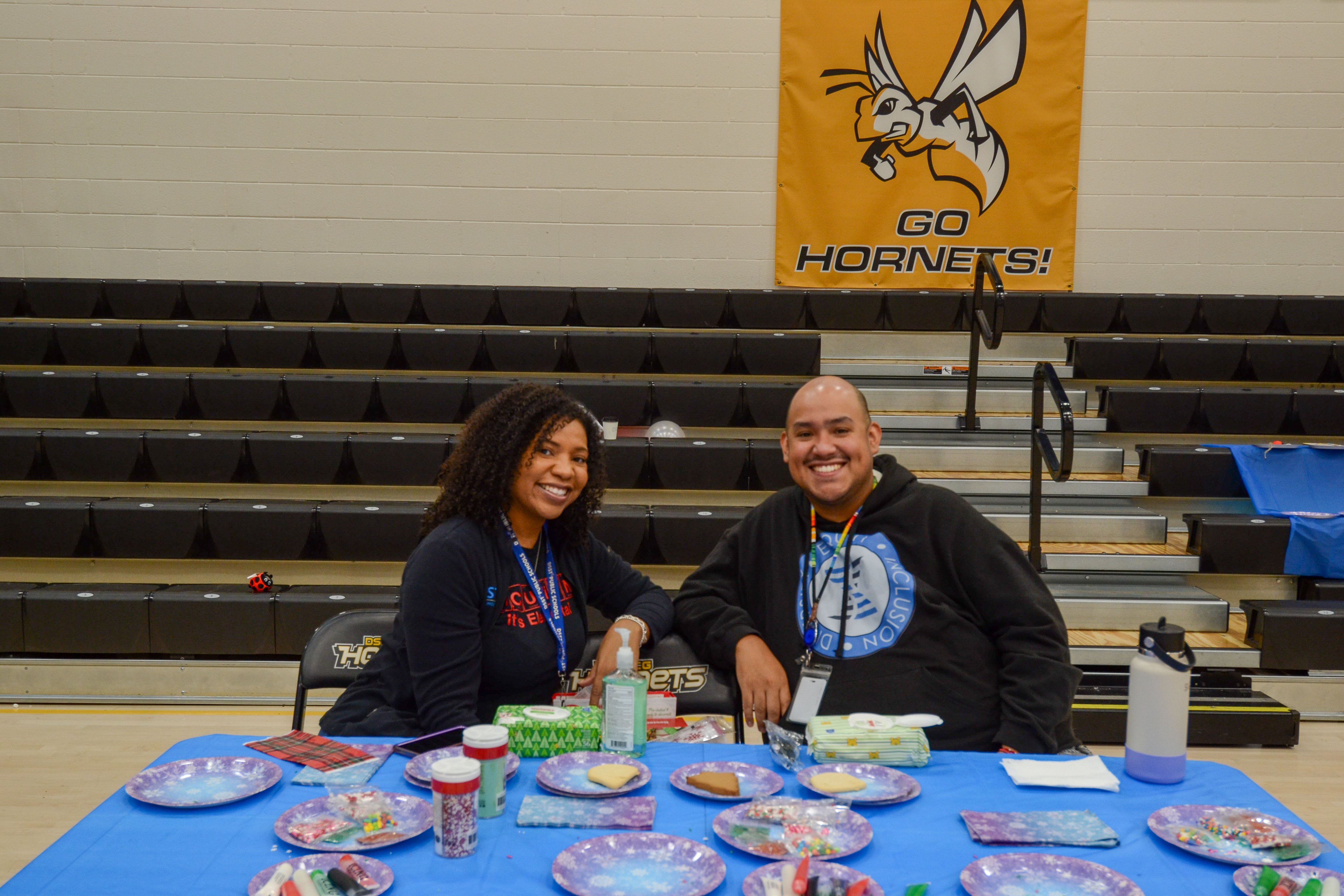
Every day, Salvador Ramirez shows up to work at the DSST Home Office with a clear sense of purpose: to build something better.
As Senior Manager of Equity, Inclusion, Strategy and Implementation, Ramirez has spent four years ensuring DSST doesn't just respond to what is happening outside its walls but actively works to counter it. For him, this work isn't abstract. It's personal.
"Our current socio-political context is making decisions to create access to basic human rights more difficult," Ramirez said. "Whether that is through anti-LGBTQ+ legislation or the dehumanization of our immigrant community, I see the work I do on the DEI team as necessary to ensure that as an organization we are actively working to counter these attacks by upholding and cultivating an inclusive community for all."
.jpg?width=800&height=450&name=image%20(16).jpg)
As a Queer Mexican-American, Ramirez understands what's at stake. He knows that for DSST's diverse families, students and staff, the question isn't whether the organization will take a stand, it's how. And that's where his work becomes essential.
"This is essential for my livelihood, and I understand that it is essential for our diverse communities that make up our families, students and staff," he said.
Ramirez's role is about transformation. A big part of his work involves supporting teams across the network to help staff grow into equity-centered leaders who not only talk about equity but also embed it in every decision they make.
"Equity leadership is necessary to continue serving our students by ensuring we are continuously reflecting on how we can better hold one another accountable and the system we are in, so as a collective, we can move towards more equitable outcomes for our students," Ramirez said. "It also ensures that we center our students with the greatest needs when it comes to our work. And by doing this, we create systems that positively impact all our students towards our mission of eliminating educational inequity."
That centering, that insistence on keeping the students with the greatest needs at the heart of every conversation, is what makes Ramirez's leadership so powerful. He's not interested in equity work that sounds good in theory but doesn't change outcomes. He's building systems that create real, measurable impact.
But Ramirez also knows that the work can be isolating, and that hope and joy can get lost in its urgency, but joy and hope aren't luxuries. They're necessities. And for Ramirez, that means creating opportunities for the DSST community to connect with each other and remember that the work is hard, yes, but it's also shared.
"Joy and hope are essential to the work of social justice," he said. "It's what can fuel us to keep driving forward in times of uncertainty and great difficulty. They are opportunities to re-center ourselves in who we are as individuals while also acknowledging the power and necessity in the collective.”
In these spaces and opportunities to re-center ourselves and celebrate and collaborate is where human connection is built. It is these spaces that remind us of our interconnectedness and that we are, in fact, not alone.